
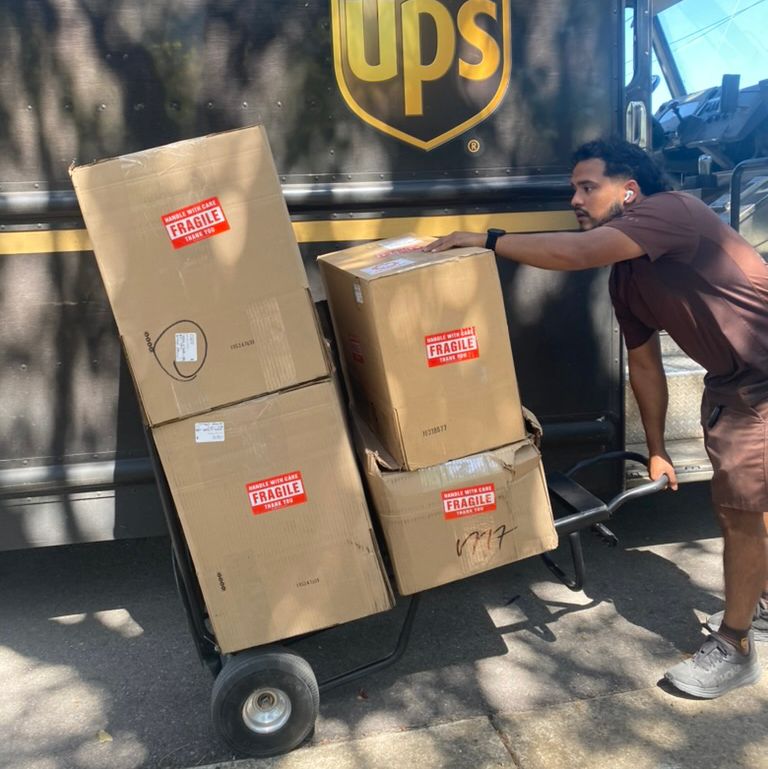
The case parts are here. I’m starting to go through them for quality assurance, but things are looking good so far. Blank PCBs have been made and are being shipped to the assembler. Assembled boards should ship to us next month. Right now, a lot of close examination is happening.
Electronics
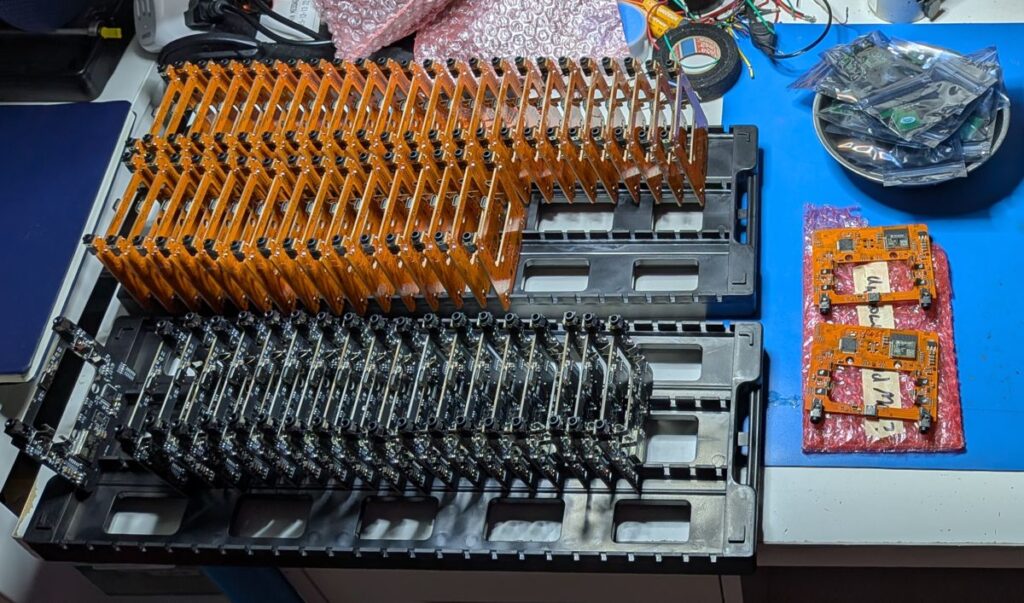
Jeremy’s been running more rigorous tests on the seventy-ish production boards we have now. A couple fixable problems happened but it’s important to do this with a large enough quantity of boards to determine the likelihood that any problem will be systemic. Remember the microphone not making complete electrical contact on every board? Well, there were no further such problems.
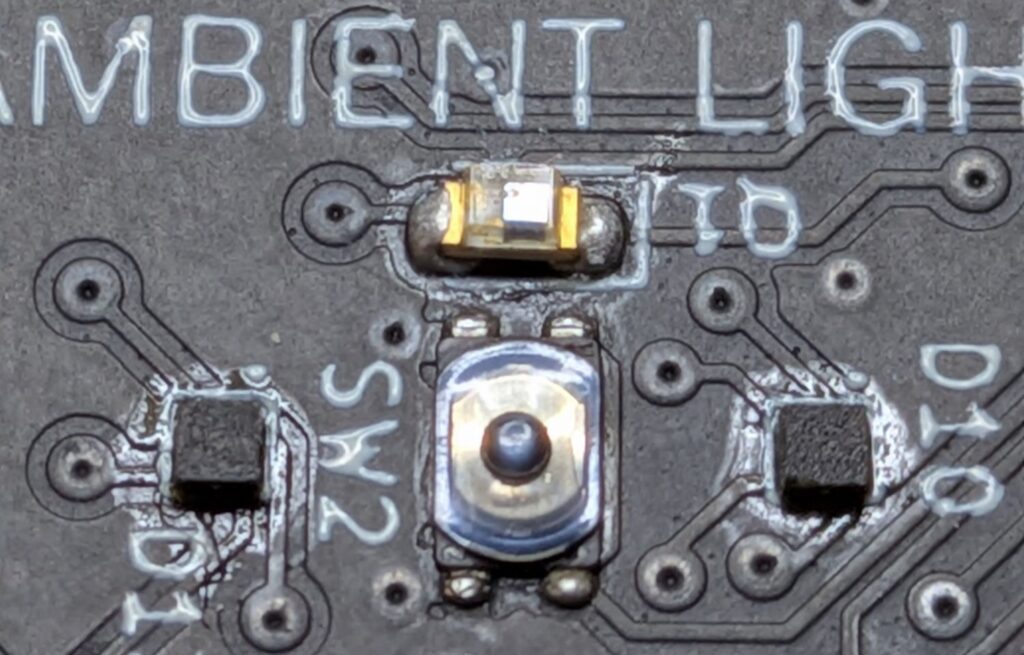
Of the few faults found, the most irritating was one of these tiny black squares not working. The LEDs are an absolute bear to fix due to being 1mm, and very hard to solder properly, especially without damaging the button which will melt almost instantly. So it will usually result in a board being scrapped. Good thing we haven’t seen many of these. Next time think we’ll use bigger LED packages.
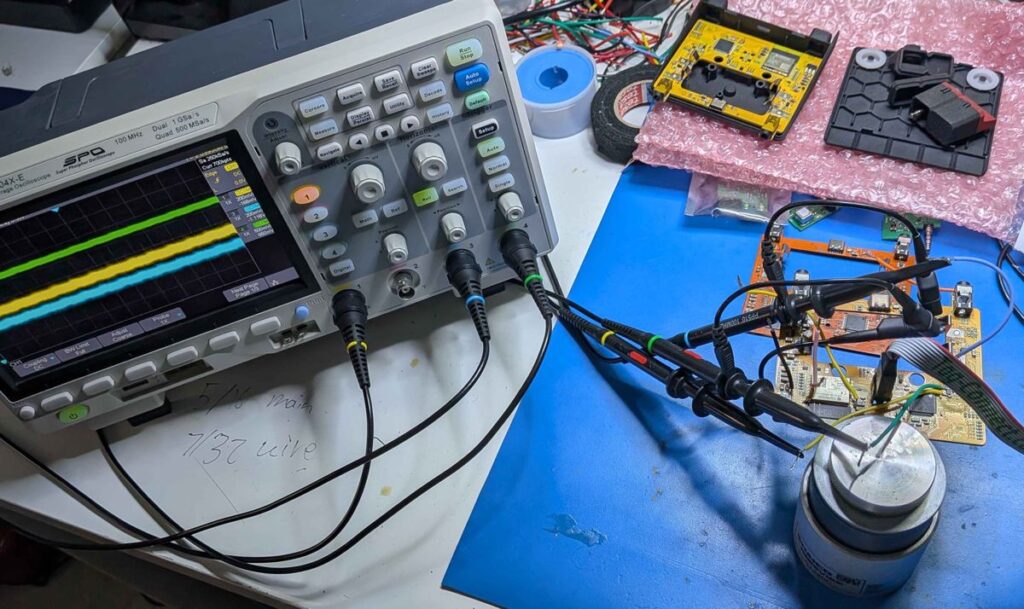
Now Jeremy has moved onto module and sleep mode power measurements. Mostly to measure the average power consumption across the boards — especially at the low-current sleep mode Pickup spends most of its time in, the board-to-board differences in, say, how clean the assembly was could make a difference in quiescent current. But in the end, turns out our sleep mode is so good it doesn’t really affect the power consumption calculation.
With that measurement data, he’s started to optimize power consumption, and gotten it to the point where we can be confident in a 9-month battery life when Pickup is sampling every minute and transmitting every hour. You’ll be able to adjust these rates for your own preferred balance between battery life, resolution and timeliness.
Software

I’ve been working on the Pickup setup procedure. If you’ve used a Twine, it’ll be pretty similar — go to a web page, connect to the Pickup’s WiFi, and tell it a WiFi network to connect to.
I’m not usually a firmware guy, but a good user experience requires a tight integration between the web app and the device. Firmware toolchains can be hairy and Jeremy’s got it down, so he gave me a laptop just for firmware development and updating, and I’ve been acquainting myself with that codebase and debugging things across the web client and firmware. Helps to have a couple of screens!
Logistics
So next we should be getting in all our production boards and some straggler components like magnets, which more than doubled in price. Yes, tariffs have mostly been rolled back, and apparently China has suspended its retaliatory export controls, but the supply chain does not change quickly. When trying to reduce dependence on other countries for rare earth minerals, it’s helpful to establish your own supply chain (the real bottleneck is processing, not mining) before starting a trade war.
So I’ve been getting new quotes. And the production boards will keep Jeremy busy for a while as he’s going to be extremely diligent in doing some hands-on QA for our first run. And then we’ll have the fun of figuring out our assembly line process here in Austin. I may press some children into service (for a fair wage).
Use case: science fair
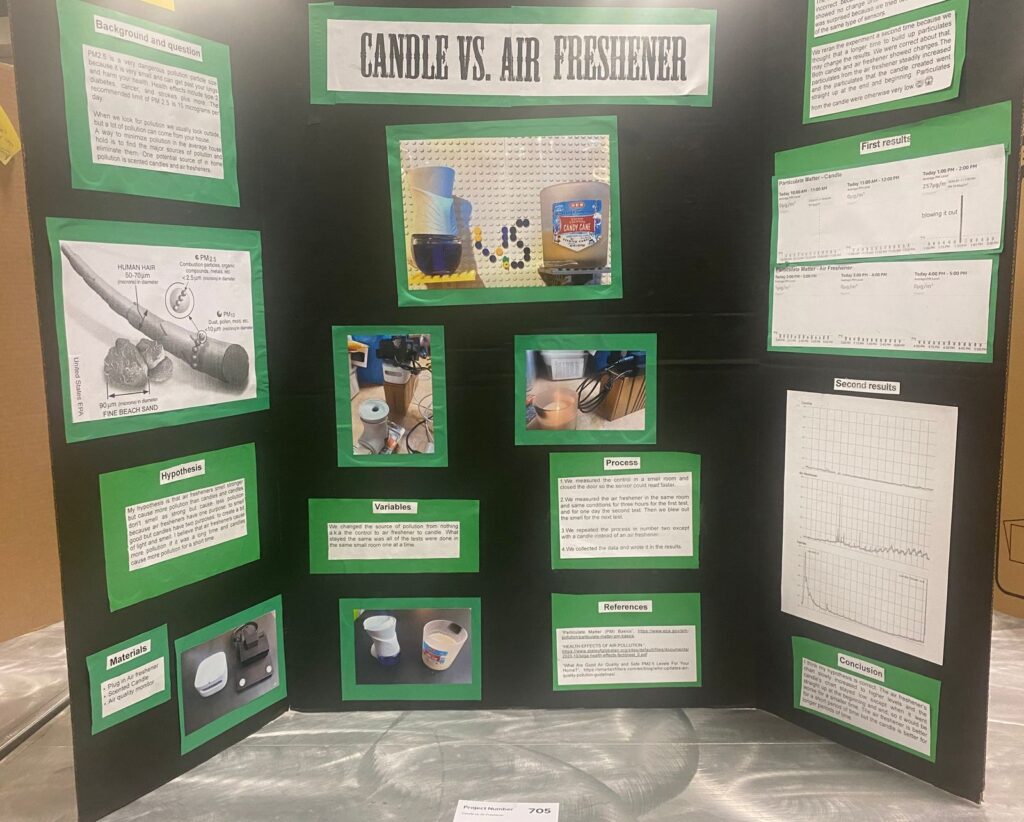
Speaking of, my son’s project for science fair tested whether scented candles or plug-in air fresheners produce more particulate pollution. We got this idea after seeing a paper which suggests that the latter can produce more of that harmful PM2.5. Naturally, we used a Pickup to log this (also compared against a different air quality monitor). The first run didn’t show much of anything, other than the smoke when he blew out the candle.
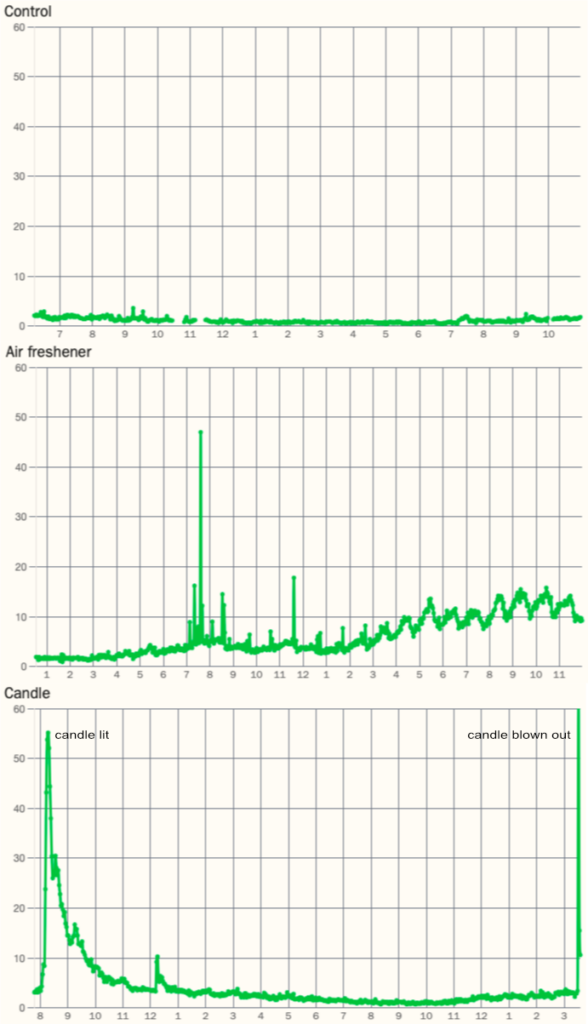
After reasoning that the first run just didn’t collect enough data, we tried it again. The other monitor’s logging had been rudimentary, with no way to adjust the sample rate or graph scale, or export data. Pickup let us sample every two minutes and tweak display parameters to show the average particulate reading over a longer time. This showed a clear upward trend in particulates over time with noisy data, confirming the hypothesis.
Win-win: I got field testing and ideas for future features, and my son got a first-place ribbon at regionals.
Reading list
Bartosz Ciechanowski makes incredible interactive explainers. My favorite is the mechanical watch.
Callback to both this post’s title and the logistics section — Infinite Detail is a maybe hopeful near-future story about the ways in which people rebuild society when the Internet goes away, taking global infrastructure with it. One of my favorite novels of the last several years. My only nitpick is that the author hasn’t written another one yet.
Crossposted from Pickup Kickstarter update #23